In this paper I take the famous quote from Tertullian, “What does Athens to do with Jerusalem?”, and explore how the Eastern Orthodox Church understands the relation between philosophy (Athens) and faith (Jerusalem). I argue that while Christianity did not begin in the arms of philosophy, at times even marginalizing pagan Greek philosophical faith in reason, the Church nevertheless took terms and distinctions from pagan philosophers to articulate the Faith “once delivered for all to the saints” and help explain the truths revealed to us from God. Consequently, I inquire into how Christians should view philosophy and human reason specifically in relation to what has been revealed. I argue that the Eastern Orthodox Church did not accept the type of Natural Theology that later developed in the Latin West, which is different from what Orthodox call “natural revelation.” I articulate the differences between these two conceptions and argue that Eastern Orthodoxy has fundamentally a different view of faith and knowledge, one that places an emphasis on the experiential and incarnational reality of both. Orthodoxy does not attempt to epistemically justify her theology on autonomous human reason and philosophy, but rather on the transformative encounter with the living God through the revelation of the Holy Trinity and the life and person of Jesus Christ. Therefore, philosophy and human reason are only justified in light of the personal revelation to man from God.
Tertullian, in considering what does Athens have to do with Jerusalem, comments on Paul’s writing, stating: “He had been at Athens, and had his interviews (with its philosophers) become acquainted with that human wisdom which pretends to know the truth, whilst it only corrupts it, and is itself divided into its own manifold heresies, by the variety of its mutually repugnant sects. What indeed has Athens to do with Jerusalem? What concord is there between the Academy and the Church? What between heretics and Christians? Our instruction comes from “the porch of Solomon” [Acts 3:5] who had himself taught that “the Lord should be sought in simplicity of heart” [Wis. 1:1]. Away with all attempts to produce a mottled Christianity of Stoic, Platonic, and dialectic composition! We want no curious disputation after enjoying the gospel! With our faith, we desire no further belief. For once we believe, there is nothing else which we ought to believe.”[1]
Philosophy
“There is no philosophical system in which man is not broken up into parts that would defeat the attempt of any thinker to put them together into a single whole.”[2] – St. Justin Popovich
“Christianity did not begin in the arms of philosophy,” as my late mentor Tristram Engelhardt points out. “Christ did not walk through Palestine preaching natural law. The early Church was not a philosophical seminar. The Apostles did not embrace the bond of fides et ratio, faith and reason. The Christianity of the first half-millennium marginalized pagan Greek philosophical faith in reason. This Christianity turned to Jerusalem, not to Athens. Although this Church took terms and distinctions from pagan Greek philosophers, it did not ground its theology in their philosophy.”[3] What then is the relation of philosophy to the Orthodox Faith? Father Florovsky explains that “One can simply say: in establishing dogmas the Church expressed Revelation in the language of Greek philosophy— or, if preferable: translated Revelation from the Hebraic, poetic and prophetic language into Greek. That meant, in a certain sense, a ‘Hellenization’ of Revelation. In reality, however, it was a “Churchification” [“Verkirchlichung”] of Hellenism.”[4] Florovsky further explains that when revelation is expressed in human language and thought, those words are transformed. He states that “the truths of the faith are veiled in logical images and concepts,” which demonstrates that not only can the words of philosophy be transformed, but sanctified. We see in St. Augustine’s City of God how despite the errors of the pagan Greeks and Latins, the seeds of the word (logos spermatikos) were sown into human history, and what men intended for evil (e.g., the various errors), God intended for good. Pagan philosophy could not separate itself from the truths of God, no matter how much it errored, since man is created in the image of God and he will inevitably reflect the truth of God in various ways and various degrees. As I have always repeated, “because man is created in the image of God who is the Truth, no one can be one-hundred percent wrong one-hundred percent of the time.” Florovsky explains:
This means that certain words— certain concepts— are eternalized by the very fact that they express divine truth. This means that there is a so-called philosophia perennis that there is something eternal and absolute in thought. But this does not at all mean there is an “eternalization” of one specific philosophical “system.” To state it more correctly— Christian dogmatics itself is the only true philosophical “system.” One recalls that dogmas are expressed in philosophical language— indeed, in a specific philosophical language— but not at all in the language of a specific philosophical school.[5]
However, when divine revelation is given and philosophy is baptized, something radically changes. As Florovsky goes on to argue concerning Hellenic Philosophy in relation to Christian Divine Revelation and dogmatics, “they change essentially; they change and are no longer recognizable. Because now, in the terminology of Greek philosophy, a new, a totally new experience is expressed. Although themes and motives of Greek thought are retained, the answers to the problems are quite different; they are given out of a new experience. Hellenism, for this reason, received Christianity as something foreign and alien, and the Christian Gospel was ‘foolishness’ to the Greeks.”[6]
Concerning the question of faith and reason, this leaves us asking if there is anything pertaining to philosophy (Athens) commensurate with Christianity (Jerusalem) or anything redeemable in philosophy from the Orthodox perspective. Since philosophy is the love of wisdom (φιλοσοφία; philio sophia), and wisdom is a type/species of knowledge, we must inquire further into the topic of knowledge.
What is knowledge: East and West
What is knowledge? Knowledge has traditionally been defined as “true justified belief.” However, this definition is superficial and tells us very little. What is truth? What does it mean to have a belief and what is implied by this? What does justification mean and how do we determine we have an appropriate or sufficient justification? Can knowledge be defined without reference to what the world is, what man is, and how humans can obtain truth in a correct/ justified manner? As I have argued before, knowledge – whatever it may be and whatever conditions must be satisfied – depends on metaphysics, that is, what exists in the world and how the world is, such that it makes possible the ability for us not only to be knowers but for the world (in its structure and order) to be known. However, we see that philosophy has provided a numerous variety of different metaphysical descriptions of the world. If how the world is makes or doesn’t make it possible for us to have knowledge, then we must determine or know what metaphysical picture of the various philosophical descriptions is true. Yet this presents an insurmountable task and problem for us. If the correct metaphysics and structure of the world provides us with the capability of knowledge, we must inevitably (and unjustifiably) assume we have knowledge before we can know we have knowledge in order to “know” what metaphysical picture from the buffet of philosopher’s theories is the right one. We are unfortunately led to an epistemic bootstrapping where we put our epistemological horse before our metaphysical cart in order justify our epistemological claims about “knowing” what metaphysical theory is true.
Ultimately, there are two stories about what the world is, how we can know the world, how knowledge is possible, and what knowledge itself is. One story originates in Athens. The other originates in Jerusalem. One story is about pretended autonomy and man’s supposed ability to have knowledge and how man speculatively defines the world (metaphysics) and knowledge (epistemology). The other is a radically different story: one in which God, who is said to be in a position to know, reveals what the world is, how He created it, and how He makes possible man’s ability to know the world, himself, and His creator.[7] I have called this autonomous epistemology versus theonomous epistemology. Autonomous epistemology is “any attempt to construct a philosophical account of the world on the assumption that it is possible God does not exist or that it is possible for man to possess knowledge and give a coherent and justified account of this knowledge independent (autonomous) from the existence and revelation of God.”[8] Theonomous epistemology is the opposite category of autonomous epistemology. So where do we find knowledge? Or better yet, where do we find the justification for knowledge, human reason, and our ability to know? As we will see, “either one sees human reason as grounded in God’s revelation, the precondition for the possibility of any knowledge (theonomous epistemology), or one sees human reason as independent (autonomous).”[9] Do we turn to Athens or do we look towards Jerusalem?
Knowledge in Natural Theology versus Natural Revelation
Natural theology, which is the modus operandi of the West, is a distinct project and differs significantly from the Eastern Orthodox understanding of “natural revelation” and the Orthodox’s ordo theologiae. Again, in the West, a pretended epistemic autonomy is granted to what is called “natural reason,” which is assumed to function properly by the light of the intellect alone. This is made explicit in John Paul II’s encyclical letter, Fides et Ratio, when he declares that natural reason “depends upon sense perception and experience and which advances by the light of the intellect alone…”[10] Not only does the Orthodox Church not grant a pretended epistemic autonomy to natural reason, it makes no separation between natural and supernatural revelation. For as St. Dumitru Staniloae states: “Natural revelation is known and understood fully in the light of supernatural revelation, or we might say that natural revelation is given and maintained by God continuously through his own divine act which is above nature. That is why Saint Maximus the Confessor does not posit an essential distinction between natural and the supernatural revelation or biblical one. According to him, this latter is only the embodying of the former in historical persons and actions.”[11]
Can knowledge be approached from a neutral point? Is there a neutral philosophical position whereby this could be approached and analyzed? As Engelhardt is quick to point out: “[T]he early Church knew that there is no neutral moral-philosophical standpoint.”[12] That being said, Engelhardt does point out that there is an important similarity to be found between the Church of the first millennium and Jerusalem. Both “recognize a fully transcendent God Who commands, Who has been experienced, and Who gives precedence to the holy over the good, to the personal over the universal. The God’s-eye perspective of the early Church of Orthodox Christians is not a perspective that discloses general moral principles, universal ideas, or abstract norms, but one that reveals the perspective of the Persons of the Trinity.” He goes on to argue that the “God’s-eye perspective of Orthodox Christians” and the position regarding divine revelation present in the ancient Hebrews (i.e., Jerusalem) “is not that of an anonymous judge, but that of a person Father Who turns to persons as persons. Unlike with Plato’s universalist vision of justice, everything is personal.[13] Engelhardt goes on to point out that Christians did not ground their morality or knowledge in philosophy but in the experience of God.[14] And the experience and knowledge of God comes from, as Bulgakov states, “the preaching of the faith. Right living is necessarily connected with right believing; they come from one another.”[15] This is why the Orthodox hold to what is most similar to virtue epistemology, that true knowledge is acquired by right living (acquiring the virtues) and true knowledge guides the mind in how to obtain the virtues and proceed further in right living. However, this is not done nor acquired autonomously, apart from God, but by divine revelation and by preaching of the faith, the faith once delivered by God to all by the saints.
In light of what has been discussed, we can begin to see that the Eastern and Western mindsets are almost entirely incommensurate. The difference between how knowledge is understood in the East versus the West is about as far as the East is from the West. We can see this in further detail by exploring St. Justin Popovich’s work on St. Isaac the Syrian’s Theory of Knowledge.
St. Isaac the Syrian’s Theory of Knowledge
St. Justin Popovich in, “The Theory of Knowledge in St. Isaac the Syrian,” shows that the history of philosophy has consistently portrayed man as a fragmented and incomplete being. Rather than presenting a vision of the human person as whole and integrated, philosophical systems have tended to divide him into opposing and irreconcilable parts. He points out that Realism, for instance, reduces man to the realm of sensory experience and matter, effectively dispersing his identity across external objects and stripping him of personhood. Conversely, rationalism elevates the intellect above all other faculties, idolizing reason while marginalizing the physical and emotional dimensions of human existence. Moreover, the philosophies that attempt to mediate between these extremes ultimately reaffirm the dominance of reason and sense perception, failing to transcend their inherent limitations and dialectical tensions. Monistic systems such as pantheism, meanwhile, conflate all distinctions, producing a worldview riddled with contradiction and incapable of logical unity. The common consequence of these diverse systems is a superficial and relativistic understanding of both man and the world—one that denies any objective foundation for truth or knowledge.
St. Justin goes on to argue that the attempt to explain man solely in terms of himself or the material world leads to philosophical futility. When man is interpreted through the lens of matter, he is effectively reduced to a thing among things, losing any sense of transcendence or intrinsic dignity. When he is explained through his own fragmented consciousness, he becomes trapped in a circular logic, likened in the text to “a mirror image of a mirror image,” producing no genuine self-knowledge. Thus, in all these philosophical frameworks, man remains incapable of accessing transcendent truth. A fundamental chasm exists between the human subject and Truth itself, a gulf that cannot be bridged by philosophical inquiry alone.
Orthodoxy, however, offers a radically different epistemological model. It posits that Truth is not discovered by man through speculative effort, but revealed by God. This revelation occurs supremely in the person of Jesus Christ, the God-man. In Christ, the eternal and transcendent Truth crosses the ontological divide and becomes immanent. He does not merely possess the truth; He is the Truth (cf. John 14:6). In Him, being and truth are united, and divine knowledge is disclosed not through abstract reasoning, but through personal communion and lived experience. The human search for truth thus finds its fulfillment not in philosophical systems, but in encounter with the incarnate Logos.
St. Justin explains that union with Christ is therefore the essential condition for true knowledge. To know the Truth is to participate in the life of the God-man, particularly through the Church, which is understood as His mystical Body. In becoming one with Christ, the believer receives the “mind of Christ” (1 Cor. 2:16), which renews and sanctifies human understanding. This union heals the inner fragmentation caused by sin and philosophical error, integrating the intellect, will, and heart into a harmonious whole. In the light of Christ, previously irreconcilable contradictions are resolved, and the human person becomes capable of perceiving the world in its true, divinely intended order.
This transformative knowledge is not merely theoretical. There is a profound and experiential aspect to knowledge in Orthodoxy. As St. Isaac explains, the process which the human faculties are purified and illumined through grace is the road that leads to a progressive apprehension of divine Truth. Knowledge is not the product of detached intellectual analysis, but the fruit of a life transfigured by divine encounter. The Orthodox theory of knowledge is one that is grounded not in speculation but in spiritual experience. It stands in stark contrast to the limitations inherent in the Western philosophical approaches to anthropology and epistemology. We see that man, left to his own devices, remains fragmented and unable to attain true knowledge of himself or the world. Only through divine revelation—particularly in the person of Jesus Christ—can man be made whole and come to know the Truth. This union with Christ not only restores the integrity of the human person but also grants access to a mode of knowing that transcends the limitations of fallen human reason. In this framework, knowledge is ultimately personal, transformative, and rooted in the mystery of divine-human communion.
Revelatory theism is not another system. It is not another philosophy. Revelation is not a philosophically construction project to reach the epistemic heavens in order to see God. The Orthodox knowledge of God, unlike vain philosophy built on the traditions of men (i.e., autonomous epistemology), which attempts to erect an epistemic house built on sand, a Tower of Babel built on man’s his own ideas, speculations, and phantasms, is a life given to him by God from above. Knowledge of God is the experience of God. As. St. Justin Popovitch states: “The God-man reveals the truth in and through Himself. He reveals it, not through thought or reason, but by the life that is His. He not only has the truth, He is Himself the Truth. In Him, Being and Truth are one. Therefore He, in His person, not only defines Truth but shows the way to it: he who abides in Him will know the Truth, and the Truth will make him free (cf. John 8:32) from sin, falsehood, and death.”[16] We sing the Troparion to St. Mark the Apostle, “From your childhood the light of truth enlightened you, O Mark…When you received the grace of the Spirit from on high, O Apostle, you broke the snares of the philosophers and gathered all nations into your net, bringing them to your Lord, O glorious Mark, by the preaching of the divine Gospel.”[17] Or again in the Akathist to our Most Holy Theotokos, “Rejoice, thou who didst destroy the webs of the Philosophers…who make Philosophers as mute as fish.”[18] It is divine revelation, not autonomous epistemology where knowledge is to be found. And revelation is a fundamentally different category than philosophy. As Florovsky states: “Revelation is theophany. God descends to man and reveals himself to man. And man sees and beholds God. And he describes what he sees and hears; he testifies to what has been revealed to him.”[19] This is theonomous epistemology. It is the humility to admit that one cannot reason themselves to God. As Scripture declares: “those who exalt themselves will be humbled, and those who humble themselves will be exalted.”[20]
You cannot construct a “coherent system” in your mind that proves God. If it isn’t revealed, it is not true. And as Florovsky states: “Revelation is history, the history of the world as the creation of God.” This is precisely why Russ Manion states, “There is no purely rational case for theism, but there is only a theistic account of rationality.”[21] Hence, God is not proven – in the strict sense of the word – nor is He something that is deduced from speculative philosophical systems or an autonomous epistemology. God is a person, not an object or a generic monotheistic deity to be proven to exist. Macarius Magnes, towards the end of the fourth century, declares: “the monarch is not the one who alone is, but the one Who alone rules.” [22] God is the Lord [sole ruler] and He has revealed Himself.[23] As we saw with St. Justin Popovich, apart from divine revelation, man is not “able to show that things possess truth.” He states that by “attempting to explain man by man, philosophy achieves a bizarre result: it presents a mirror image of a mirror image…” and concludes that because philosophy, “whatever its path, is centered on matter and on man…” what results is “the impossibility of any true knowledge of man or of the world.” This is precisely why autonomous man and vain philosophy makes “conjectures that transcend both man and matter.”[24] In final analysis, man apart from divine revelation cannot prove anything. He cannot demonstrate knowledge exists, how it exists, what the necessary conditions for knowledge are, etc., without falling into endless speculation, arbitrariness, and vicious circularity, that is, a mirror image of a mirror image. And if man cannot obtain truth in these areas, a fortiori (even more so) he cannot know God through his broken and unjustified systems and philosophical construction projects. Again, this is why God is not something to be proven. He is to be experienced and known through His revelation. And it is He by whom everything else is proven and known.[25] As Manion perfectly states, “God’s revelation is not validated by some autonomous epistemology. Rather, our epistemology [or philosophy] is validated by the revelation of God and the story contained in that revelation. God’s revelation is self-authenticating, because, by it, everything else is authenticated.”[26]
The question concerning knowledge is about hierarchy and order. What comes first and what is second? Scripture says, “Seek first the Kingdom of God and His righteousness, and all these things shall be added unto you.”[27] This applies to knowledge as well. The West and followers of Natural Theology invert the proper order, putting what is second first and what is first second. However, Orthodoxy preserves the correct order and keeps God and His divine revelation as the Fount of Knowledge. The Patristic and Orthodox method is to approach the question of knowledge beginning with the persons Father, Son, and Holy Spirit and God’s revelation to man.
Sanctifying and Saving Philosophy
One must therefore start from faith – and that is the only way to save philosophy. Philosophy itself, on its summits, demands the renunciation of speculation; questing, it attains the moment of supreme ignorance; a negative way where the failure of human thought is acknowledged. Here, philosophy ends in a mysticism and dies in becoming the experience of an Unknown God Who can no longer even be named.[28] – Lossky
Since Christ is the perfect measure of all things, it is He – and only He – who “breaks the closed systems in which philosophers imprison and denature the reflection of the living God in human thought – but He also brings His accomplishment to the intuitive attention which the philosophers have devoted to this reflection….”[29] Philosophy is directed at truth. But what is truth (quid est veritas)? St. Isaac answers: “Truth is the perception of things that is given by God.”[30] However, as we have seen, man unaided is incapable of obtaining truth. Therefore, as St. Justin Popovich explains:
[T]he power of Truth, from the other side, responds to the powerlessness of man on this side. Transcendent Truth crosses the gulf, arrives on our side of it and reveals Itself— Himself—in the person of Christ, the God-man. In Him transcendent Truth becomes immanent in man. The God-man reveals the truth in and through Himself. He reveals it, not through thought or reason, but by the life that is His.[31]
Divine Revelation, a theonomous epistemology, becomes the only way for man to perceive truth, to have knowledge, and to sanctify and save philosophy. This happens when truth is no longer seen as an idea, knowledge no longer an abstraction or simply a propositional state in one’s own mind, but when one sees truth as a person, the person of Jesus Christ – the God-man. As St. Justin Popovich in “The God-Man,” so eloquently puts it: “All Truths of Orthodoxy emerge from one truth and converge in one truth, infinite and eternal. That truth is the God-man Christ. If you experience Orthodoxy to its limit, you will inevitably discover that its kernel is the God-man Christ. In fact, all the truths of Orthodoxy are nothing other than different aspects of the one Truth — the God-man Christ.”[32]
Personhood and Knowledge
Our being can find its fulfillment as person only in communion with a higher personal being. Such a begin cannot, however, reveal its own greatness or bring our being to fulfillment either through a relationship with the various levels below the human reality or by reducing our being to the unconscious state proper to a passable object. This requires instead a relation in which man himself, in continuously new ways, freely and consciously assimilates the infinite spiritual richness of the supreme Personal reality. This means that our personal reality remains free in relation to this higher being. Such a relationship is analogous to the relationship of one human person to another, a relations hip in which the liberty of both is preserved.
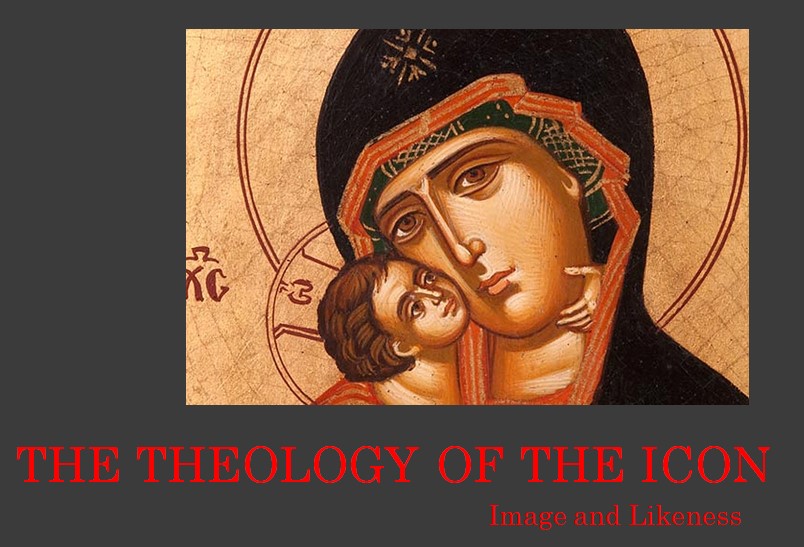
I have written about the non-personal nature of knowledge in the West. In my paper, “An Orthodox Theory of Knowledge,” I argued that the West embracing Hellenistic philosophy began to conceive of God more as a philosophical concept,[33] God as substance (ousia) rather than person (hypostasis),[34] inverting the ordo theologiae[35] of the East. Metropolitan Zizolous is quick to point out that this is why many have represented “ancient Greek thought as essentially ‘non-personal.’”[36] Athens, therefore, represents the errors of Hellenism, which the Fathers so ardently fought against, one of which is what Metpropolitan Zizolous has called ancient Greek ontology. Greek ontology considers the unity and ontology of God to consist in the substance of God, which later ends up being the same fundamental theological errors in the Latin West. Therefore, Athens (Hellenistic philosophy) brings one “to the ancient Greek ontology: God is first God (His substance or nature, His being), and then exists as Trinity, that is, as persons.”[37] For this reason, among others, the Western mindset is – as I said earlier – about as far as the East is from the West. As we have seen, for the Orthodox, knowledge must be personal if it is to be knowledge. This is precisely why Orthodoxy is not an ideology. It is not a philosophy. It is not even really a religion or an organization. First and foremost, it is the revelation of the True God and the true man, face to face. This phrase “face to face,” in Greek prosopon pros prosopon, expresses the reality of what was previously described, person to person. In other words, when one man meets another, he finds himself facing another face, and the other one is also facing him. This is the mystery of the meeting of persons: the true glory of the Human Face and Person, the human Image and Appearance, the human God-like Icon. This is why Christ became man. This is why He became visible, portrayable, and representable. This is why the Theology of the Icon is essential not only for correct Christology, it is necessary for knowledge, since it expresses the reality of revelation, the person, and the union of God and man that is necessary for knowledge itself.
Hence, secular philosophy – and those who begin with the same Hellenistic presuppositions – has no means to mediate God and man, truth and themselves, knowledge and philosophy, and finally the reality of what it means to be a human to themselves. Consequently, in their futile quest, they lose themselves and their very being becomes unraveled. Ultimately this adherence to ideas over personhood is essentially what prevented philosophy from obtaining a coherent account and justification of knowledge, as well as a knowledge of God. It deprived the West of the experiential communion with the persons (hypostases) of God that is uniquely mediated God and man through His personal divine energies. This amounted to the worshiping the West’s idea of God rather than the persons of God Himself who exists first and foremost as hypostases of Father, Son, and Holy Spirit revealed in the mediating divine uncreated energies.
Knowledge of God: The Apophatic Ascent
The intellect makes a better slave than a master! And the Orthodox provide a way to master the intellect and obtain true knowledge. It is the apophatic ascent to the divine.
Pavel Florensky writes: “We human beings ‘know’ by participating in the very form of that which is known: cognoscere. … The act of knowing is not only a gnoseological but also an ontological act, not only ideal but also real. Knowing is a real going of the knower out of himself, or (what is the same thing) a real going of what is known into the knower, a real unification of the knower and what is known.”[38] The Orthodox Faith is an ontological relationship between man and God that serves as a necessary condition for any possibility of knowledge, which also includes knowing what God reveals of Himself to us both in nature[39] and in the act of humble devotion and prayer. Furthermore, “This mystery of faith as personal encounter and ontological participation is the unique foundation of theological language, a language that apophasis opens to the silence of deification.”[40]
Cataphatic knowledge of God, a discursive intellectual knowledge, is distinct from what the Fathers call apophatic knowledge. St. Dimitru Staniloae states: “According to patristic tradition, there is a rational or cataphatic knowledge of God, and an apophatic knowledge. The latter is superior to the former because it completes it.”[41] Apophaticism is the way of negation, an ascetic and spiritual exercise of accepting God’s revelation as the starting point of all knowledge, removing or negating all mediating thoughts and systems (including any pretended autonomous thoughts), to provide one with an immediate experience and knowledge of God. Illumined by grace immediately present and experience by God, man and his understanding is radically transformed within an authentic divine experience that ontologically changes the knower, conforming him to the image of Christ in such a union. Gnosis, therefore, is for the sake of theosis, the Christian’s deification and union with God. Since St. Dionysius the Areopagite tells us that “Such a union of those divinized with the light that comes from on high takes place by virtue of a cessation of all intellectual activity,”[42] we find through the apophatic ascetical practice that one ceases all such intellectual activity. It is through the still silence (hésuchia)[43] of apophatic humility that the intellect is brought down into the heart (nous) and learns to listen to the voice of God in silence so that now knowledge of Him is “given to us by faith, that is to say, by our participatory adherence in the presence of Him Who reveals Himself.”[44] It is here that we begin to experience and know God and partake in His divine and deifying gifts, His divine energies in the immediate (not mediated) experience of God.[45] Hence, the apophatic ascent to the divine is, as Lossky states, an “internally objective relationship for which the catechumen prepares himself, and through which baptism and chrismation are conferred upon the faithful: gifts which restore and vivify the deepest nature of man.”[46]
Rather than approaching God with concepts as an object to be known, the apophatic way[47] is to bring the mind into submission to the heart (the spiritual organ that connects us to God).The mind must become the slave to the heart. The intellect must humble itself and realize the impossibility of any concept of God. God must be experienced. In short, God cannot be grasped as an object of thought, as the philosophers believed. God is truly unknowable to the intellect. St. Gregory Palamas states: “God is not only beyond knowledge, but also beyond unknowing. His revelation itself is also truly a mystery of a most divine and an extraordinary kind, since the divine manifestations, even if symbolic, remain unknowable by reason of their transcendence.”[48] This is precisely what the apophatic articulations express concerning the reality of God.[49] We are, however, granted a true knowledge of God through experiencing Him in love and by the humility of the apophatic ascent that brings about an apophatic knowledge of the Lord. Lossky explains: “[T]hrough apophatic knowledge we gain a kind of direct experience of his mystical presence which surpasses the simple knowledge of him as cause who is invested with certain attributes similar to those of the world. This latter knowledge is termed apophatic.”[50] This is the peace that surpasses all understanding that Scripture speaks of.
The act of apophaticism (apophasis) as it relates to approaching God is itself an act of humility. As Alex Nesteruk states: “Apophaticism becomes a synonym of humility…”[51] Therefore, let us humble ourselves that we may be exalted. Let us break the snares of the philosophers and experience God. Let us come taste and see that the Lord is good!
[1] Tertullian, “On Prescription Against Heretics” VII, p. 246.
[2] St. Justin Popovich, “The Theory of Knowledge of St. Isaac the Syrian,” 67.
[3] Engelhardt, After God, 216.
[4] Florovsky, “Revelation, Philosophy, and Theology,” 1.
[5] Ibid.
[6] Ibid.
[7] “These two kinds of worldviews describe very different worlds. They tell different stories about how the world came to be, about the nature of the world and about the nature of man. They give different accounts regarding man’s relationship to the world and how the world can be known by man. These two accounts of man’s knowledge present us with two very different epistemological stories.” (Russ Manion, The Contingency of Knowledge and Revelatory Theism, 1.
[8] “The Reason for Reason,” 3.
[9] Ibid.
[10] John Paul II, Fides et Ratio, Ch. 1, 8-9.
[11] Dimitrue Staniloae, The Experience of God, 1.
[12] Tristram Engelhardt, After God, 218.
[13] Ibid. 219.
[14] “The Christians of the first centuries lived in a canonical morality grounded not in philosophy but in an experience of the living God Who commands.” (Tristram Engelhardt, After God, 218)
[15] Sergius Bulgakov, The Orthodox Church, 10.
[16] St. Justin Popovich, “The Theory of Knowledge of St. Isaac the Syrian,” 68.
[17] The Troparion to St. Mark the Apostle.
[18] Akathist to the Theotokos.
[19] Fr. Georges Florovsky, “Revelation, Philosophy, and Theology,” 1.
[20] Matthew 23:12
[21] Manion, “Atheism: Two Portraits,” 1.
[22] “Μονάρχης γάρ ἐστιν οὐχ ὁ μόνος ὤν, ἀλλ’ ὁ μόνος ἄρχων.” Macarius Magnes, Apocriticus bk. 4. ch. 20. (5.1. ed. Blondel, p. 199, 4.)
[23] “God is the Lord, and He revealed Himself to us.” (Psalm 117:27)
[24] St. Justin Popovich, “The Theory of Knowledge of St. Isaac the Syrian,” 68.
[25] “God is proven, not as the conclusion of rational or empirical theistic arguments, but as the very ground of argument itself. It is with the surrender to God’s view of Himself, the world, and ourselves that one can articulate a coherent theory of knowledge.” (Manion, “The Contingency of Knowledge and Revelatory Theism,” 18)
[26] Manion, “The Contingency of Knowledge and Revelatory Theism,” 18.
[27] Matthew 6:33.
[28] Vladimir Lossky, Orthodox Theology, 21.
[29] Ibid., 20.
[30] St. Isaac the Syrian, Homily 69, p. 272.
[31] St. Justin Popovich, “The Theory of Knowledge of St. Isaac the Syrian,” 68.
[32] St. Justin Popovich, “The God-Man: The Foundation of the Truth of Orthodoxy,” 1.
[33] “Within Western Christian theology, God was regarded ever more as a philosophical idea, rather than the Person of the Father, Who begets the Son, and from Whom alone the Holy Spirit proceeds. God as the most personal of all was obscured through a theology with a robust philosophical overlay that rendered the theological approach to God primarily one of scholarship, not of prayerful ascetical struggle.” (Engelhardt, After God,, 35)
[34] “When God was conversing with Moses, He did not say, “I am the essence”, but “I am the One Who is.” Thus it is not the One Who is who derives from the essence, but essence which derives from Him, for it is He who contains all being in Himself.” (St. Gregory Palamas, Triads in Defense of the Holy Hesychasts, III.ii.12)
[35] “ordo theologiae: Farrell emphasizes that the Patristic (that is, Orthodox) method for approaching theological questions is, in part, a faithful following of the correct order in which the theological questions themselves are posed. Orthodox Fathers of the Church begin with the persons Father, Son, and Holy Spirit; through his experience of God the illumined Father understands that he has not merged with the divine essence, because he knows he is in communion with a loving God; he has not become God.” (James Kelley, “Joseph P. Farrell: An Overview of the Theological Works) ”
[36] John Zizioulas, Being as Communion, 27.
[37] Ibid., 40.
[38] Pavel Florensky, “The Pillar and Ground of the Truth: An Essay in Orthodox Theodicy in Twelve Letters,” 47.
[39] Natural Revelation: “The Orthodox Church makes no separation between natural and supernatural revelation. Natural revelation is known and understood fully in the light of supernatural revelation, or we might say that natural revelation is given and maintained by God continuously through his own divine act which is above nature.” (Dumitru Staniloae, The Experience of God, 1)
[40] Vladimir Lossky, The Mystical Theology of the Eastern Church, 25.
[41] Staniloae, The Experience of God, 95.
[42] Saint Dionysius, On Divine Names., I.5 PG III, 593C.
[43]Hésuchia, ἡσυχία, is the Greek word for quietness, stillness, silence. Hesychasm is a type of asceticism in Eastern Orthodoxy that stresses silence, since purity in prayer implies the state of silence. It is a mystical tradition of prayer, whereby one draws the nous (mind) into the heart, retreats inward by ceasing to engage with the senses in order to obtain an experiential knowledge of God, the “peace of God that surpasses all understanding.” (Philippians 4:7) This practice, incorporated by the Desert Fathers, traces back to Christ’s own words, when He says, “when thou prayest, enter into thy closet, and when thou hast shut thy door, pray.” (Matthew 6:6) The hesychasts are the ‘silents’: encounter and gift, gnosis is placed beyond the noux; it demands the surmounting and arrest of thought.” (Lossky, Orthodox Theology, 13) When engages in silent contemplation, one opens thought to a reality that lies beyond thought itself. This type of thought is a new mode of thinking such that “thought does not include, does not seize, but finds itself included and seized, mortified and vivified by contemplative faith.” (Lossky, Orthodox Theology, 14)
[44] Vladimir Lossky, Orthodox Theology, 16.
[45] “For he who partakes of the divine and deifying Gifts is not alone, but with you, my Christ, who came from the thrice-radiant Light which enlightens the world.” (Saint Simeon the New Theologian)
[46]Vladimir Lossky, Orthodox Theology, 16.
[47] In Latin the way of negation is via negativa, but it is the same thing as apophasis, talking about God in terms of what He is not.
[48]St. Gregory Palamas, The Triads, I. iii. 4.
[49] It should be noted that apophasis is directed at a mystical knowledge imparted to us by God through acknowledging the failure of the human mind to obtain God as a thinkable concept and, therefore, it is by no means agnosticism simply masquerading as faith, which would constitute as some form of fideism.
[50] Dimitru Staniloae, Orthodox Dogmatic Theology: The Experience of God, 95.
[51] Alex Nesteruk, Light from the East, 9.
About the author

Fr. Deacon Ananias Sorem, PhD is CEO, Founder, and President of Patristic Faith. Father is an Orthodox apologist and Professor of Philosophy at Fullerton College and Carroll College. He has a BA in Liberal Arts from Thomas Aquinas College, together with an MA (Honors) and PhD in Philosophy (Epistemology; Philosophy of Science; Philosophy of Mind) from University College Dublin. His current academic work focuses on philosophical theology, epistemology, and the philosophy of science. Father is the author of several articles and peer-reviewed papers, including: “Searle, Materialism, and the Mind-Body Problem,” “Gnostic Scientism and Technocratic Totalitarianism,” “An Orthodox Approach to the Dangers of Modernity and Technology,” and “An Orthodox Theory of Knowledge: The Epistemological and Apologetic Methods of the Church Fathers.” He is also known for his YouTube channel, the Norwegian Nous, where he provides content on theology, apologetics, logic, and philosophy.
- Fr. Deacon Ananias

- Fr. Deacon Ananias

- Fr. Deacon Ananias
- Fr. Deacon Ananias
- Fr. Deacon Ananias
- Fr. Deacon Ananias